Do You Have Any New Year’s Resolutions for Your Smile?

December 6th, 2011

New Year's EveIt happens every year around this time, especially after Christmas. Soon, all the talk will be about New Year’s resolutions. Exercising and losing weight are probably the two most common you’ll hear. Eating right is another popular pick.

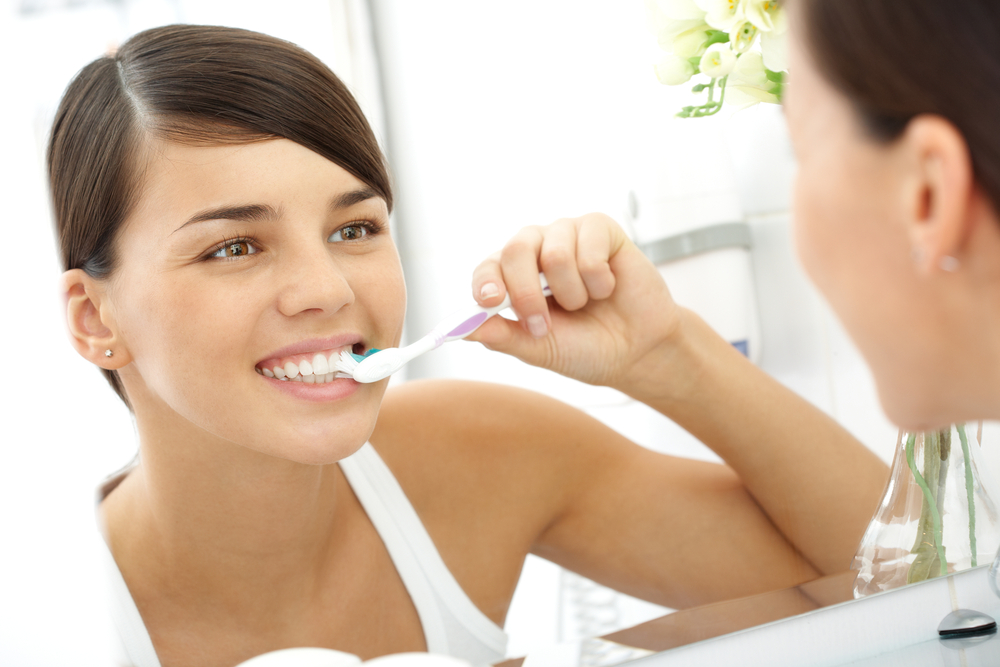
What you don’t hear too often, though, is “I resolve to visit my dentist every six months,” or “I resolve to brush twice a day everyday, floss at least once a day, and gargle with a quality mouthwash at least once a day.” But these are exactly the kinds of resolutions many could benefit from making.

Every year, millions of people avoid going to the dentist, whether because of anxiety or another reason. That means that millions of people may not be giving their smile the care it needs to remain strong and healthy.

Regular dental visits and daily brushing and flossing are important because they help you keep bacteria and plaque from building up between your teeth and gums. Bacteria and plaque are what lie behind tooth decay and gum disease, but they have also been linked to problems in the rest of the body, too.

So, looked at from that perspective, resolving to visit your dentist twice a year and pay extra attention to your brushing and flossing isn’t about improving your smile—it’s about keeping your whole body healthy. And that’s a resolution anyone can get behind.

How to Keep Your Teeth Happy this Holiday Season

November 18th, 2011

Stuffing, rolls, pies, cakes…the holidays are a time full of carbohydrate-rich, sugary foods. This can really do a number on your oral health, but there are some simple ways you can help combat cavities while still enjoying Grandma’s pumpkin pie (or pecan if that’s your preference!).9831704

If you can, eat those carb-heavy foods such as stuffing and rolls with a balanced meal consisting of some protein. This helps to counteract some of the acids produced when sugars and bacteria in the mouth come together.

Limit your consumption of sticky foods. These foods take longer to chew, meaning they stay in the mouth longer and increase cavity risk.

Carry a travel toothbrush with you to your Thanksgiving meal destination, even if you’re just going for the day. Can’t brush your teeth immediately after eating for some reason? Rinse your mouth out with water to remove as much debris and acid as possible.

And try not to graze so much. It’s easy to spend the entire day walking around a party eating snacks, but every time you pop something into your mouth, it creates acids. Spend some time NOT eating on Thanksgiving day to cut down on the buildup of cavity-causing agents.

By following these simple holiday dental care tips, you can keep your teeth and gums healthy while still enjoying your Thanksgiving goodies. Happy holidays!

Filling in the Information Gaps about Diastema

November 4th, 2011

DiastemaDiastema is a term used to describe a gap between two teeth. Many celebrities have a diastema including Madonna, Eddie Murphy, Jack Black, Lauren Hutton, Amelia Earheart, and Willie Nelson. For some people, a diastema makes their smile unique, and they choose to keep the charming midline gap.

Animal Tendencies

A diastema is a natural feature of several mammal species, especially herbivores. The diastema in the dentition of animals such as rodents, sheep, and beavers allow food to be routed into the cheek so consumption can continue unimpeded. A diastema also allows material from gnawing to be expelled through the gap. Read the rest of this entry »

For This Year’s Halloween, Choose Candy Made with Xylitol!

October 20th, 2011

trick or treaterYou probably have memories of your own Halloweens when you were a kid. You know what that sense of anticipation feels like waiting for Halloween to come, and that giddy, nervous sensation as you stand on a neighbor’s porch, waiting for candy.

But you probably have memories of getting a filling, too. And though getting fillings is a much more comfortable experience now than it was in the past, you’d still like to see your own little one get through Halloween cavity-free.

So why not stock up on candy made with xylitol this Halloween?

Read the rest of this entry »

Are You At Risk for Cavities?

October 7th, 2011

Are you at risk for cavities? That may sound like a trick question—everyone is at risk for cavities! But some people are at a higher risk than others, and knowing the risk factors could help you improve your oral health and avoid the extensive tooth decay that eventually turns in to the dreaded cavities.tooth with umbrella

So, in the spirit of helping you avoid future cavities by educating you on some of the many risk factors, here’s a list! Read the rest of this entry »

Catch a Frog Under the Full Moon … and Other Toothache Cures

September 21st, 2011

caveman smallToothaches, and attempts to cure them, have no doubt been around as long as we have. In fact, researchers discovered evidence of tooth drilling that took place more than 9,000 years ago. It seems some enterprising dentist-in-training put down his spear and picked up a crude dental drill to fix cavity-ridden molars in his fellow Neolithic man. The good news is that the process was unbelievably precise and took about minute. The bad news? No anesthesia!

Tooth Worms are Eeeeeeevil!

It was long believed cavities were caused by worms that burrowed inside the tooth and caused pain by wiggling around. The earliest reference to tooth worms was in a Sumerian text dated around 5,000 BCE.  Right up until the 18th century most people, including dental practitioners, believed that tooth worms caused decay and discomfort.

Some ancient doctors mistook tooth nerves as tooth worms, and removed them. It was the barbaric version of root canal therapy. Well, except the doctors would also take out the entire tooth. Present-day dentists try to avoid extractions because tooth roots are important to the health and strength of the jawbone. Read the rest of this entry »

Support Your Health with Antioxidants

September 8th, 2011

veggiesYour Smile, and Your Overall Health, Is Under Attack

You can’t tell it right now, but your body is under attack from free radicals.

What are free radicals? To understand that question, you need to know a little bit about the human body.

You already know your body is made of cells, and that cells are made up of molecules, and that molecules are made of atoms. You may also know that every atom is made up of two positive protons and two neutral electrons.

A free radical is an atom that’s lost one of its electrons. In this state, the atom is unstable. Its singular goal becomes stealing an electron from wherever it can find one, and that usually means taking one from another nearby atom, resulting in a chain reaction of electron-stealing known as oxidation.

If this chain reaction is allowed to continue, your health can be negatively impacted. Problems like diabetes, gingivitis, heart attack, and even cancer, have all been linked to free radicals.

Read the rest of this entry »

The Tooth Fairy May Be Relatively Young, But Her Story Began a Long Time Ago

August 25th, 2011

shutterstock_41235853-[Converted]While most of us can’t imagine a world without the tooth fairy, she didn’t actually grace us with her presence until the early 1900s… at least, not in her current form. And depending where in the world you are, the “tooth fairy” is likely unrecognizable to those of us who grew up waking up the morning after losing a tooth to find a quarter under our pillow.

In fact, it would appear that our own nocturnal visitor’s origins have been influenced by rituals and superstitions held all over the world, many of which date back hundreds of years. Read the rest of this entry »

The History of Teeth Whitening

July 25th, 2011

whiteningRemember when people rode around in horse-drawn buggies and went to the barber for their teeth whitening needs? No? Yes, indeed, the barber once did your hair and your dental care. Sounds pretty convenient, right? Well, once you find out how it was done, you’ll be glad you go to the dentist for teeth whitening.

The Quest for Whiter Teeth Begins

The ancient Egyptians were known for their beautification techniques, and they certainly sought after whiter teeth. Around 4,000 years ago, they used a paste of wine vinegar and ground pumice stone to whiten their teeth. The mixture was brushed on with frayed sticks (yes, like very small tree branches). The whiter your teeth, the wealthier people thought you were. Read the rest of this entry »

Five Reasons Why It’s Worthwhile to Smile

July 8th, 2011

smilesNineteenth century novelist George Eliot once said, “Wear a smile and have friends; wear a scowl and have wrinkles.”

Yet smiling is more than just a way to convince your mother that you really did enjoy that meatloaf surprise. Even the smallest upward lip curve—whether or not it’s sincerely delivered—has far-reaching emotional and physical benefits.

Here are five advantages of turning that frown upside down:

1. Studies have shown that smiling lowers blood pressure. If you need some instant Zen, then all you have to do is smile. Chanting is optional (especially if you’re standing in line at the grocery store). Read the rest of this entry »